
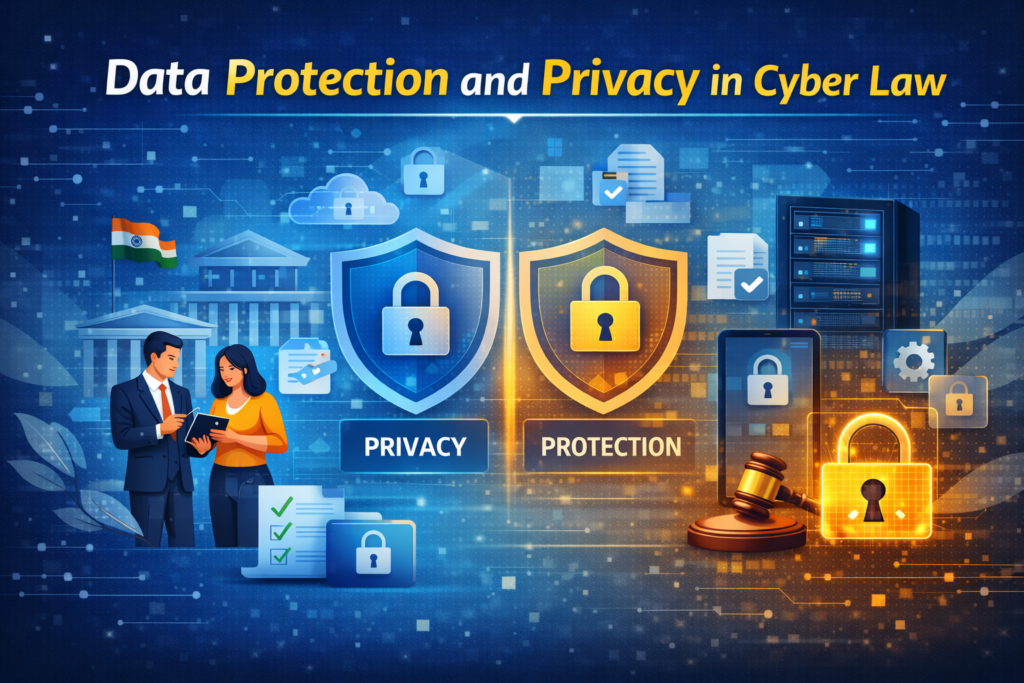
Quick Answer: Data protection and privacy in cyber law refers to the legal frameworks — including India’s DPDP Act, GDPR, and the IT Act 2000 — that govern how organizations collect, use, store, and secure personal data. These laws set mandatory security controls, consent requirements, breach reporting obligations, and individual rights. Non-compliance can result in heavy financial penalties, legal action, and reputational damage.
Data protection and privacy in cyber law is one of the most critical compliance domains for businesses operating in today’s digital economy. As organizations collect and process increasing volumes of personal data, cyber laws across the globe — and especially in India — have established clear legal obligations for how that data must be handled, secured, and governed.
These laws don’t just create paperwork — they define the technical, organizational, and procedural standards that every business must meet. Understanding them is essential for avoiding penalties, maintaining customer trust, and operating securely in digital environments.
For Indian businesses specifically, the DPDP Act is the primary framework governing data protection and privacy. Our complete guide on DPDP Act compliance steps walks through exactly what organizations must do to meet its requirements.
What is Data Protection and Privacy in Cyber Law?
Data protection and privacy in cyber law refers to the body of legislation that regulates how digital personal information is collected, processed, stored, shared, and secured. Privacy laws focus on individual rights and consent — ensuring people control how their data is used. Protection laws focus on the technical measures organizations must implement to keep that data safe from breaches, theft, and misuse.
Data Privacy in Cyber Law
Focuses on rights and consent — how personal data is collected, used, and shared. Gives individuals control over their information through access, correction, and deletion rights.
Data Protection in Cyber Law
Focuses on security controls — the technical and organizational measures that keep data safe from breaches, unauthorized access, and loss.
Together, privacy and protection form the two pillars of responsible data governance under cyber law. Our detailed guide on data privacy vs data protection explains how these two concepts differ and why both are essential.
Understanding Cyber Laws
Cyber laws govern digital activities including data usage, online transactions, and cybersecurity practices. They aim to prevent cybercrime, protect sensitive information, and ensure accountability across digital ecosystems. Organizations must understand which cyber laws apply to them — and cyber laws continue to evolve, making ongoing compliance monitoring essential.
- Scope Coverage: Includes data privacy, cybercrime, digital contracts, and intellectual property protection
- Legal Enforcement: Authorities enforce cyber laws to prevent misuse of digital platforms and data
- Business Responsibility: Organizations must ensure secure operations and compliance with applicable regulations
- Technology Evolution: Laws adapt continuously to address emerging threats and technological advancements
- Global Variations: Different countries have unique cyber laws requiring localized compliance strategies
- Security Mandate: Cyber laws enforce implementation of robust cybersecurity practices across organizations
Key Cyber Laws Governing Data Protection and Privacy
Multiple cyber laws govern data protection and privacy globally. Understanding which laws apply to your organization — and how they compare — is the foundation of any compliance strategy. Aligning with CERT-In cybersecurity compliance requirements is an additional obligation for businesses operating in India that complements these frameworks.
| Law | Jurisdiction | Key Focus | Penalty |
|---|---|---|---|
| DPDP Act 2023 | India | Consent, data principal rights, breach notification | Up to ₹250 crore |
| IT Act 2000 | India | Cybercrime, digital transactions, data protection | Varies by offence |
| GDPR | European Union | Consent, user rights, accountability, security | Up to €20 million or 4% of global turnover |
| HIPAA | USA (Healthcare) | Healthcare data confidentiality and security | Up to $1.9 million per violation category |
| CCPA | California, USA | Consumer rights over personal data usage | Up to $7,500 per intentional violation |
Data Privacy Principles in Cyber Laws
Data privacy principles form the foundation of cyber laws globally, guiding organizations in ethical and lawful data handling. These principles are not just aspirational — they are enforceable legal requirements under most modern privacy frameworks. Understanding these principles is essential for building a comprehensive data privacy and protection strategy.
- Lawfulness: Data must be processed legally and fairly under applicable regulations always
- Transparency: Organizations must clearly inform users about data collection and usage practices
- Purpose Limitation: Data used strictly for the defined and legitimate purpose it was collected for
- Data Minimization: Collect only the data actually necessary for the specific business purpose
- Accuracy: Ensure data remains correct and updated throughout its entire lifecycle
- Accountability: Organizations are responsible for demonstrating compliance with privacy regulations
Data Protection Techniques Required by Cyber Laws
Cyber laws mandate specific technical measures to secure personal data. Our Information Security (InfoSec) services help organizations implement these mandated protections comprehensively — covering encryption, access management, monitoring, and the full range of controls required for cyber law compliance.
- Encryption: Converts data into secure format to prevent unauthorized access effectively
- Access Controls: Restricts data access based on defined roles and responsibilities
- Firewalls: Protect networks from unauthorized access and external cyber threats
- Monitoring Systems: Detect suspicious activities and prevent potential security breaches proactively
- Backup Systems: Ensure data recovery in case of loss or cyber incidents
- Authentication: Verifies user identity before granting access to sensitive data securely
Role of Consent in Data Protection and Privacy Cyber Laws
Consent is central to data privacy under cyber law. Organizations must obtain clear, informed, and revocable consent before collecting or processing personal data. Systems must be built to support consent collection, audit trails, and withdrawal. Understanding how consent managers work under the DPDP Act is particularly important for Indian businesses building compliant data collection systems.
- Explicit Consent: Users must clearly approve data processing before any collection or usage begins
- Informed Consent: Organizations must explain purpose and usage before collecting personal data
- Revocable Consent: Users can withdraw consent at any time without facing negative consequences
- Purpose Clarity: Data usage must align strictly with the purpose stated at consent
- Transparency Requirement: Clear communication ensures users understand how their data will be used
- Audit Records: Consent records serve as legal evidence of compliance during regulatory audits
Role of Organizations in Cyber Law Compliance
Organizations carry the primary responsibility for implementing data protection and privacy requirements under cyber law. The role of the Data Protection Officer (DPO) in cybersecurity governance has become central to this responsibility — DPOs ensure the legal and technical dimensions of cyber law compliance are properly managed and integrated.
- Policy Implementation: Establish clear data protection policies aligned with applicable cyber law requirements
- Employee Training: Educate staff on data privacy practices and security responsibilities regularly
- Security Measures: Deploy tools and technologies to safeguard sensitive data across all systems
- Audit Practices: Conduct regular audits to identify compliance gaps — supported by IT audit and compliance support services
- Risk Management: Identify and mitigate risks associated with data handling processes proactively
- Accountability: Ensure responsibility for data protection is clearly defined across all teams
Cybercrimes Related to Data Privacy Violations
Cyber laws exist in large part because of the real threats posed by cybercrimes targeting personal data. Understanding these threats helps organizations prioritize the right protections. Remote Monitoring and Management (RMM) services provide the continuous visibility needed to detect and respond to these threats before they become reportable breaches.
- Identity Theft: Unauthorized use of personal information for fraudulent activities
- Phishing Attacks: Deceptive communications trick users into sharing sensitive credentials
- Data Breaches: Unauthorized system access exposes confidential personal information at scale
- Ransomware: Attackers encrypt organizational data and demand payment for release
- Social Engineering: Psychological manipulation leads individuals to reveal confidential data
- Insider Threats: Employees misuse access privileges leading to internal data leaks or breaches
Data Breach Reporting Requirements Under Cyber Laws
Most modern cyber laws require mandatory breach reporting within defined timelines. Understanding cyber incident reporting timelines and regulatory expectations helps organizations build compliant breach management processes that satisfy both DPDP and broader cyber law obligations. Keeping systems patched through patch management services is one of the most effective ways to prevent the vulnerabilities that lead to reportable breaches.
- Mandatory Reporting: Organizations must report breaches to authorities within defined timelines
- User Notification: Affected individuals must be informed about breaches promptly and transparently
- Impact Assessment: Evaluate severity of breach and potential risks to affected individuals carefully
- Regulatory Compliance: Ensure reporting aligns with legal requirements across all applicable jurisdictions
- Incident Documentation: Maintain complete records of breaches for audit and compliance purposes
- Corrective Actions: Implement security improvements after every incident to prevent recurrence
Challenges in Implementing Cyber Law Compliance
Implementing data protection and privacy requirements under cyber law is genuinely challenging. The complexity of overlapping regulations, evolving threats, and legacy infrastructure creates real barriers for organizations of all sizes. Understanding these challenges helps build a more realistic and effective compliance roadmap.
- Regulatory Complexity: Multiple overlapping laws across regions make compliance difficult for global organizations
- Technology Gaps: Legacy systems often lack the capability to meet modern security requirements
- Cost Factors: Implementing security and compliance measures requires significant investment
- Awareness Issues: Lack of employee awareness significantly increases risk of data breaches
- Third-Party Risks: Vendors may not comply with required data protection standards consistently
- Rapid Evolution: Cyber threats evolve faster than regulations, creating compliance gaps frequently
Future Trends in Cyber Laws and Data Protection
Cyber laws are evolving rapidly alongside technology. Organizations that stay ahead of these trends will be better positioned for compliance and competitive advantage. Reviewing how continuous IT governance protects organizations long-term provides a practical model for building future-ready compliance programs that adapt as regulations evolve.
- AI Regulation: Laws addressing risks of artificial intelligence in data collection and processing emerging globally
- Stronger Penalties: Governments increasing penalties for non-compliance to enforce stricter adherence
- Global Alignment: Efforts to standardize data protection laws across countries improving consistency
- Privacy by Design: Integrating privacy controls during system development becoming a mandatory practice
- User Empowerment: Individuals gaining more control over personal data usage increasingly
- Automation Growth: Automated compliance tools improving efficiency and reducing manual efforts significantly
How Infodot Supports Cyber Law Compliance
Infodot helps organizations achieve compliance with data protection and privacy requirements across cyber laws through managed IT and cybersecurity services. From compliance frameworks and security monitoring to endpoint management and incident response, our managed IT support services provide the technical foundation and expertise needed to meet every cyber law obligation effectively and efficiently.
- Compliance Services: Designs and implements frameworks aligned with DPDP, IT Act, and global cyber law requirements
- Security Monitoring: Continuous monitoring detects threats and ensures proactive data protection
- Endpoint Management: Secures devices accessing organizational data across all environments
- Patch Management: Keeps systems updated to close the vulnerabilities cyber laws require you to address
- Cloud Security: Protects cloud environments where personal data is increasingly stored and processed
- Incident Response: Rapid response reduces breach impact and supports mandatory cyber law reporting requirements
Conclusion
Data protection and privacy in cyber law is not a compliance exercise — it is a strategic imperative for every organization operating in the digital economy. The laws that govern personal data handling are growing stricter, enforcement is intensifying, and the penalties for non-compliance are significant. Organizations that build genuine, proactive compliance programs — combining the right policies, technology, and employee awareness — will reduce risk, build customer trust, and be positioned for sustainable growth as cyber laws continue to evolve.
FAQs — Data Protection and Privacy in Cyber Law
What is data protection and privacy in cyber law?
Data protection and privacy in cyber law refers to the legal frameworks — including India’s DPDP Act, GDPR, and the IT Act 2000 — that govern how organizations collect, use, store, and secure personal data. These laws set mandatory security controls, consent requirements, breach reporting obligations, and individual rights that all businesses must comply with.
Why are cyber laws important for data protection?
Cyber laws are important because they define enforceable standards for securing personal data and preventing misuse. They create accountability, specify penalties for non-compliance, and protect individuals from identity theft, fraud, and unauthorized access to their personal information.
What is the difference between data privacy and data protection in cyber law?
Data privacy focuses on individual rights and consent — how personal data is collected, used, and shared. Data protection focuses on the technical and organizational security measures that keep data safe from breaches and unauthorized access. Both are required by most modern cyber laws.
What cyber laws apply to businesses in India?
Indian businesses are primarily subject to the DPDP Act 2023 (for digital personal data) and the IT Act 2000 (for cybercrime, digital transactions, and data protection). Organizations must also comply with CERT-In cybersecurity guidelines and may be subject to sector-specific regulations.
What are the penalties for violating data protection cyber laws?
Penalties vary by law. Under India’s DPDP Act, penalties can reach ₹250 crore. GDPR penalties can reach €20 million or 4% of global annual turnover. Beyond financial penalties, organizations face legal action, operational restrictions, and serious reputational damage.
What is mandatory breach reporting under cyber laws?
Most cyber laws require organizations to report data breaches to regulators and affected individuals within specific timelines. Under the DPDP Act, breaches must be reported to the Data Protection Board of India. Failure to report promptly is itself a compliance violation.
How does consent work under data protection cyber laws?
Consent under cyber laws must be explicit, informed, specific, and revocable. Organizations must clearly explain why they are collecting data, how it will be used, and must provide users with a simple way to withdraw consent at any time without negative consequences.
How can organizations comply with data protection and privacy cyber laws?
Organizations can comply by implementing clear data protection policies, deploying security controls like encryption and access management, conducting regular audits, training employees, maintaining consent records, and establishing structured incident response plans that meet all mandatory reporting requirements.
What security controls are required by cyber laws?
Cyber laws typically require encryption, role-based access controls, continuous monitoring, multi-factor authentication, data backup and recovery systems, and documented incident response procedures — all designed to protect personal data from unauthorized access and breaches.
Why should businesses invest in cyber law compliance?
Beyond avoiding penalties, cyber law compliance builds customer trust, reduces breach risks, improves governance, and supports sustainable business growth. Organizations that treat compliance as a strategic investment — not just a legal obligation — gain a genuine competitive advantage in the digital economy.