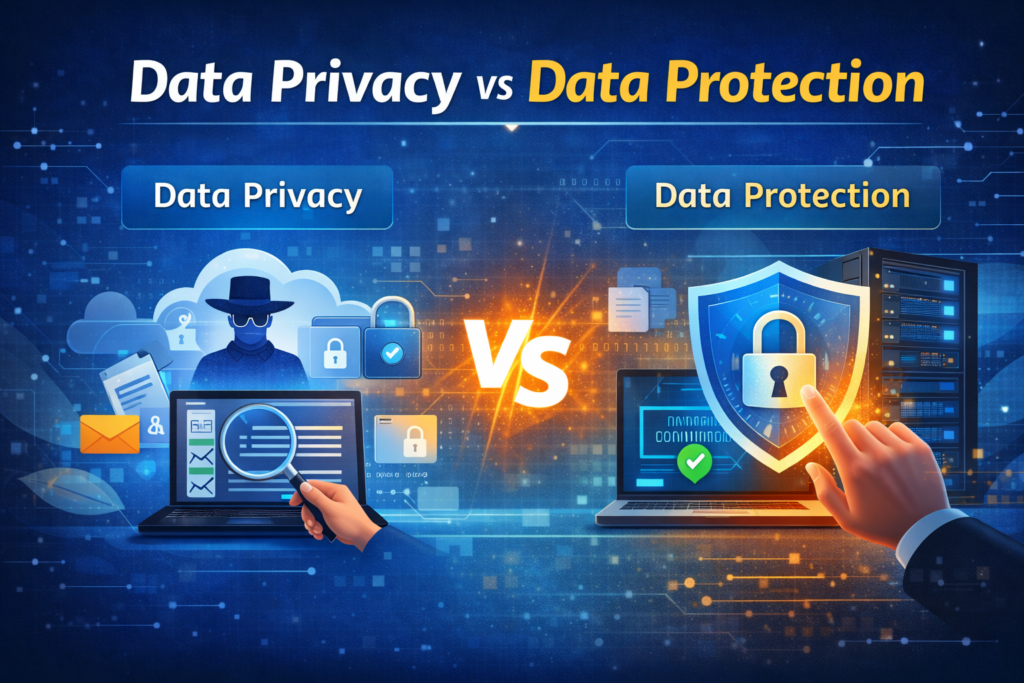
Understanding data privacy vs data protection is essential for every organization managing sensitive information today. While the two terms are often used interchangeably, they represent distinct concepts with different focuses, objectives, and implementation approaches. Data privacy is about the rights and rules governing how personal data is collected, used, and shared. Data protection is about the technical and organizational measures that keep data secure from breaches and unauthorized access. Together, they form the backbone of responsible data governance.
Before diving into the differences, it helps to understand the regulatory context. India’s DPDP Act and global frameworks like GDPR address both data privacy and data protection — making it critical for businesses to understand how each concept applies.
What is Data Privacy?
Data privacy refers to an individual’s right to control how their personal data is collected, processed, and shared. It ensures transparency and consent in every data interaction. Organizations must clearly define the purpose of data collection and restrict usage accordingly. Privacy laws protect individuals from misuse and build trust in digital platforms.
- User Consent: Individuals must approve data collection before processing begins legally and transparently
- Transparency: Organizations must clearly explain how data will be used and stored responsibly
- Rights Management: Users can access, modify, or delete their personal data at any time
- Purpose Limitation: Data must be used only for the purpose defined during collection
- Ethical Use: Prevents misuse of personal data for unauthorized or harmful activities
- Regulatory Support: Privacy laws enforce compliance and protect user rights consistently
What is Data Protection?
Data protection refers to safeguarding data against unauthorized access, breaches, and loss through technical and organizational security measures. The goal is to ensure confidentiality, integrity, and availability of data at all times. Robust data protection strategies are essential for securing sensitive information and maintaining business continuity. Our Information Security (InfoSec) services help organizations implement exactly these controls — comprehensively and in alignment with regulatory requirements.
- Encryption: Converts data into unreadable format to prevent unauthorized access
- Access Control: Restricts data access based on roles and responsibilities
- Monitoring Systems: Detects threats and prevents potential security breaches proactively
- Backup Systems: Ensures data recovery in case of loss or cyber incidents
- Security Policies: Defines guidelines for protecting data across all systems
- Incident Response: Ensures quick action to minimize impact of data breaches
Data Privacy vs Data Protection: Key Differences
The core difference between data privacy vs data protection lies in their focus and implementation. Privacy deals with policies and rights — the “what” and “why” of data handling. Protection deals with security controls — the “how” of keeping data safe. Both are interdependent and essential for effective data governance.
| Aspect | Data Privacy | Data Protection |
|---|---|---|
| Focus | Individual rights and consent over personal data | Security of data against breaches and unauthorized access |
| Objective | Ensures lawful and ethical data usage | Ensures secure storage, transmission, and processing |
| Scope | Policies, consent, and user rights | Technical controls and security measures |
| Implementation | Sets rules for data collection and use | Enforces rules through encryption, monitoring, and access control |
| Risk Handled | Reduces misuse, unauthorized sharing, and consent violations | Reduces breaches, cyberattacks, and unauthorized access |
| Governed By | GDPR, DPDP Act, CCPA, privacy regulations | ISO 27001, CERT-In guidelines, cybersecurity frameworks |
| Example | Consent banners, privacy notices, data deletion requests | Firewalls, encryption, multi-factor authentication |
Why Understanding the Difference Matters
Knowing the difference between data privacy vs data protection helps organizations design better policies, deploy the right security controls, and meet regulatory requirements. Businesses that treat these as separate but complementary disciplines are better positioned to build customer trust, avoid penalties, and maintain operational resilience. Our IT audit and compliance support helps organizations assess where they stand on both fronts and close any gaps efficiently.
- Better Compliance: Meets regulatory requirements for both privacy and protection effectively
- Risk Reduction: Minimizes chances of data misuse and security breaches significantly
- Improved Governance: Enhances data management practices across the organization
- Strategic Planning: Enables better decision-making for data handling and security
- Customer Trust: Builds confidence through responsible and secure data practices
- Operational Efficiency: Streamlines processes related to data management and protection
Data Privacy Principles
Data privacy is guided by core principles that ensure ethical and lawful data handling. Understanding these principles is the first step toward building a compliant privacy framework. Our complete guide on what is data privacy and protection provides a deeper dive into these foundational concepts.
- Lawfulness: Data must be processed legally and fairly under applicable regulations
- Transparency: Organizations must inform users about data usage practices clearly
- Purpose Limitation: Data used only for the specific purpose defined during collection
- Data Minimization: Collect only necessary data required for business operations
- Accuracy: Ensure data remains correct and updated consistently across systems
- Accountability: Organizations responsible for ensuring compliance with privacy regulations
Data Protection Techniques
Data protection involves multiple technical techniques to secure data and prevent unauthorized access. Maintaining robust network and internet security is one of the most critical technical pillars in any data protection strategy.
- Encryption: Secures data during storage and transmission processes
- Firewall Protection: Prevents unauthorized access to network systems
- Access Controls: Limits data access to authorized users only
- Monitoring Tools: Detects suspicious activities and prevents breaches proactively
- Backup Systems: Ensures data recovery during system failures or cyber incidents
- Authentication: Verifies user identity before granting access to sensitive data
Regulatory Frameworks for Privacy and Protection
Various laws govern data privacy and data protection globally. Understanding DPDP Act compliance steps is essential for Indian businesses, while global enterprises must also navigate GDPR, HIPAA, and other regional frameworks. Compliance with CERT-In cybersecurity requirements is an additional obligation for businesses operating in India.
- GDPR: European law ensuring strong data privacy and protection standards globally
- DPDP Act: Indian regulation governing digital personal data protection effectively
- HIPAA: Protects healthcare data and ensures confidentiality in medical systems
- IT Act 2000: Addresses cybercrime and data protection in India effectively
- CCPA: Provides consumer rights over personal data usage in California
- ISO Standards: Provide frameworks for implementing security and privacy management systems
Role of Organizations
Organizations play a central role in implementing both data privacy and data protection. The role of the Data Protection Officer (DPO) in cybersecurity governance has become increasingly important as regulators expect clearly assigned accountability for both privacy and protection.
- Policy Implementation: Define clear privacy and protection policies aligned with regulations
- Security Measures: Deploy tools to protect sensitive data across systems consistently
- Employee Training: Educate staff on data handling and security responsibilities regularly
- Audit Practices: Conduct audits to identify gaps and ensure compliance continuously
- Risk Management: Identify and mitigate risks associated with data handling activities
- Accountability: Ensure responsibility for data protection is clearly defined across teams
Role of Technology
Technology enables both data privacy and data protection to be implemented at scale. Remote Monitoring and Management (RMM) services provide the continuous system visibility needed to enforce protection controls and detect anomalies before they become breaches. Keeping systems updated through patch management is equally critical for closing the vulnerabilities that undermine both privacy and protection efforts.
- Security Tools: Firewalls and antivirus systems protect against cyber threats effectively
- AI Monitoring: Detects anomalies and potential threats proactively across systems
- Automation: Reduces manual effort in managing data protection processes efficiently
- Data Loss Prevention: Prevents unauthorized sharing of sensitive data effectively
- Cloud Security: Secures data stored in cloud environments consistently
- Endpoint Protection: Protects devices accessing organizational data effectively
Challenges in Data Privacy
Organizations face growing challenges in maintaining data privacy due to evolving regulations and increasing data volumes. Managing these challenges requires a structured approach backed by the right expertise and tools.
- Regulatory Complexity: Multiple laws create challenges in compliance management
- User Awareness: Lack of awareness leads to improper data handling practices
- Data Volume: Large volumes of data increase privacy risks significantly
- Third-Party Risks: Vendors may introduce vulnerabilities in data handling processes
- Technology Gaps: Legacy systems may not support modern privacy requirements
- Compliance Costs: Implementing privacy measures requires significant investment
Challenges in Data Protection
Data protection faces unique challenges from evolving cyber threats and complex IT environments. Understanding cyber incident reporting and response timelines is critical for organizations building resilient protection frameworks.
- Cyber Threats: Increasing attacks targeting sensitive data across systems globally
- Complex Infrastructure: Securing multiple systems and networks simultaneously is challenging
- Resource Limitations: Lack of skilled professionals impacts implementation of security measures
- Integration Issues: Difficulty integrating security tools across diverse platforms
- Data Growth: Increasing data volume makes protection more complex significantly
- Incident Response: Managing breaches requires efficient and timely response mechanisms
Data Lifecycle Management
Managing data throughout its lifecycle ensures both privacy and protection are maintained at every stage — from collection through to secure deletion. Each stage requires specific controls that address both privacy rights and protection obligations simultaneously.
- Data Collection: Ensure lawful and minimal collection aligned with privacy principles
- Data Storage: Secure storage using encryption and access controls effectively
- Data Usage: Restrict usage to defined purposes during collection stage consistently
- Data Sharing: Ensure secure and compliant sharing with third parties
- Data Archiving: Retain data securely for compliance and reference purposes
- Data Disposal: Ensure secure deletion to prevent unauthorized access risks
Impact on Businesses
The difference between data privacy vs data protection has real business consequences. Organizations that fail to address either concept risk financial penalties, reputational damage, and operational disruption. Those that invest in both gain a genuine competitive advantage in the market.
- Compliance Requirements: Organizations must meet regulatory standards for data handling
- Financial Risks: Non-compliance leads to fines and legal consequences
- Reputation Impact: Breaches damage brand image and customer trust significantly
- Operational Disruption: Cyber incidents affect business continuity and performance
- Customer Retention: Strong practices improve customer loyalty and trust consistently
- Competitive Advantage: Secure data practices enhance market positioning
Future Trends in Privacy and Protection
Both data privacy and data protection will continue to evolve with technological advancement and increasingly stringent regulation. Organizations that stay ahead of these trends will be better positioned to maintain compliance and sustain customer trust.
- AI Security: AI enhances threat detection and data protection capabilities
- Zero Trust Model: Continuous verification ensures secure access to data systems
- Stricter Regulations: Governments introducing stronger laws for data protection globally
- Privacy by Design: Integrating privacy controls during system development effectively
- Automation Growth: Automated systems improve efficiency and reduce risks significantly
- User Awareness: Increasing awareness of data rights among individuals globally
Best Practices for Data Privacy
Implementing strong data privacy practices requires clear policies, consistent consent management, and a culture of accountability. These best practices apply to organizations of all sizes across all industries.
- Clear Policies: Define transparent data handling policies aligned with regulations
- Consent Management: Ensure proper consent collection and tracking mechanisms
- User Rights Support: Enable users to access and manage their data easily
- Data Minimization: Collect only necessary data to reduce privacy risks
- Regular Audits: Conduct audits to ensure compliance and identify gaps
- Employee Training: Educate staff on privacy practices and responsibilities regularly
Best Practices for Data Protection
Strong data protection practices reduce breach risks and demonstrate security maturity to regulators and customers alike. Reviewing how continuous IT governance strengthens long-term compliance provides a useful model for maintaining these protections over time.
- Encryption Usage: Protect data during storage and transmission processes
- Access Management: Limit data access based on roles to reduce exposure risks
- Monitoring Systems: Detect threats and prevent breaches proactively
- Backup Strategy: Maintain backups for data recovery during incidents
- Security Updates: Regularly update systems to address vulnerabilities consistently
- Incident Response: Implement structured response plans for security incidents
How Infodot Supports Data Privacy and Data Protection
Infodot helps organizations implement both data privacy and data protection effectively through managed IT and cybersecurity services. From compliance support to continuous security monitoring, our managed IT support services give organizations the expertise and infrastructure needed to address both disciplines comprehensively.
- Compliance Support: Helps organizations meet regulatory requirements for privacy and protection
- Security Monitoring: Provides continuous monitoring to detect threats proactively
- Endpoint Management: Secures devices accessing organizational data effectively
- Patch Management: Ensures systems are updated to prevent vulnerabilities consistently
- Cloud Security: Protects cloud infrastructure with advanced security measures
- Incident Response: Rapid response minimizes impact of security incidents
Conclusion
The difference between data privacy vs data protection is more than semantic — it defines how organizations think about, govern, and secure personal data. Privacy ensures ethical and lawful data usage. Protection ensures that data is kept safe from threats and breaches. Together, they create a strong, comprehensive data governance framework. Businesses that invest in both will be better positioned to build customer trust, meet regulatory expectations, and maintain secure operations in an increasingly data-driven world.
FAQs — Data Privacy vs Data Protection
What is the difference between data privacy and data protection?
Data privacy focuses on how personal data is collected, used, and shared with proper consent, while data protection focuses on securing that data using technical measures like encryption and access controls to prevent breaches and unauthorized access.
Can data privacy exist without data protection?
No — data privacy cannot be fully achieved without data protection. Privacy policies require strong protection measures to enforce rules and ensure personal data is not exposed or misused.
Why is data privacy important for businesses?
Data privacy is important because it protects individuals’ rights, builds trust, ensures transparency, and helps organizations comply with legal requirements like GDPR and India’s DPDP Act.
Why is data protection important for businesses?
Data protection safeguards data from cyber threats, breaches, and unauthorized access. It ensures confidentiality, integrity, and availability of data — all essential for business continuity and compliance.
What are examples of data privacy practices?
Examples include obtaining user consent, providing privacy notices, limiting data usage to defined purposes, and allowing users to access or delete their personal data as per applicable regulations.
What are examples of data protection measures?
Examples include encryption, firewalls, multi-factor authentication, access controls, data backups, and monitoring systems that protect data from unauthorized access and cyber threats.
How do data privacy and data protection work together?
They work together by ensuring data is used responsibly and secured effectively. Privacy defines the policies and rights, while protection implements the security measures that enforce those policies in practice.
What regulations govern data privacy vs data protection?
Data privacy is primarily governed by laws like GDPR, DPDP Act, and CCPA. Data protection is addressed through cybersecurity frameworks like ISO 27001, CERT-In guidelines, and sector-specific regulations.
What is the role of encryption in data protection?
Encryption converts data into an unreadable format, ensuring that even if data is accessed without authorization, it cannot be understood or misused without the decryption key.
Why should businesses invest in both data privacy and data protection?
Businesses should invest in both because privacy ensures ethical data use while protection ensures security. Together they create a strong foundation for compliance, customer trust, and sustainable business growth.